
Acquisition Premium Study: An analysis of acquisition premiums in Australia from 2016 to 2025

Share
Updated in April 2026 with the latest data and insights, this article reflects current trends and includes new analysis to support more informed decision-making
An acquisition premium is the amount being the difference (excess) between the market value of a company and the price paid to acquire it.
An acquisition premium represents the increased cost of buying a target company during a merger and acquisition (M&A) transaction.
The Valuations team at Findex Corporate Finance (Aust) Ltd (“Findex Corporate Finance”) conducted a study of acquisition premiums in Australian transactions completed between 1 January 2016 and 31 December 2025. This study was conducted for analysis purposes only. The underlying data for the acquisition premium was sourced from S&P Capital IQ and yielded approximately 459 transactions (with meaningful data) that were completed during the period.
No specific definition exists for acquisition premium, which could reflect the value of both control and synergies. Our study is based on all transactions irrespective of the percentage acquired. Acquisition premiums observed for transactions where percentage acquired is equal to or more than 50% may arguably have higher proportion of control premiums. However, it is difficult to separately quantify control premiums from observable data of acquisition premiums.
Several factors can affect the size of the acquisition premium paid in a transaction, including:
Overall deal environment in the economy and specific industry;
Nature of industry/sector in which the target operates;
Type of consideration;
Competitive situation in the bidding process;
Percentage already owned by the buyers;
Percentage sought to be acquired in a transaction;
Size of the transaction; and
Buyer's size and purchasing power relative to the transaction and target’s size.
Not all of the above factors are analysed and presented in this study due to limitations in the availability of data and/or results of observed data not being meaningful.
We note that S&P Capital IQ reports acquisition premiums based on:
Offer per share price;
Share price one month before announcement;
Share price one week before announcement; and
Share price one day before announcement.
However, our analysis is based on acquisition premiums reported based on share price one month before announcement, due to availability of valid data points. That date period is also believed to be relatively less affected by bid speculation.
We also note that our analysis is based on all positive acquisition premiums (an excess of price over market value).
Key Findings
Acquisition premiums by sector from 2016 to 2025
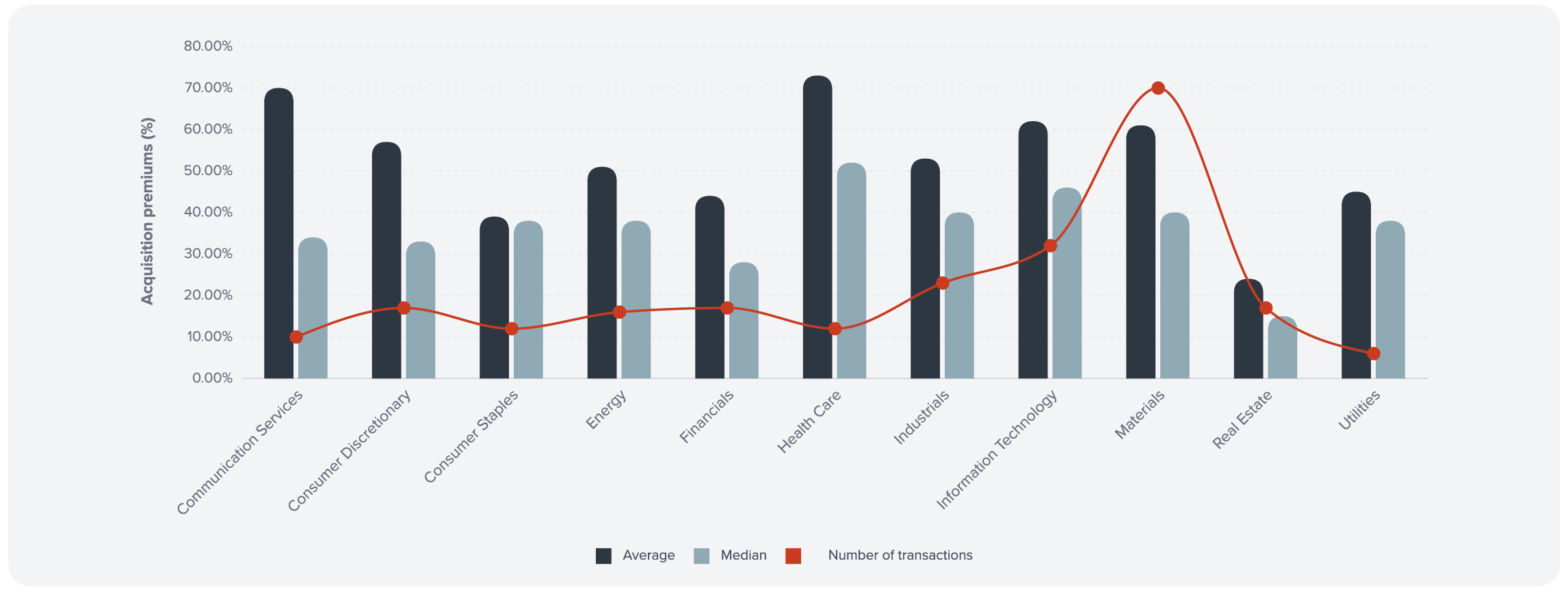
We observed significant variability in the acquisition premium for transactions across different sectors.
The materials sector dominated the number of transactions, whereas the health care sector recorded the highest median acquisition premium since 2016.
The lowest median acquisition premiums were observed for the real estate sector.
Trends in acquisition premiums from 2016 to 2025
The highest acquisition premiums were observed for transactions closed during 2022. 2025 witnessed 15 out of a total 47 transactions (where a premium was reported) closed in the materials sector due to surging demand for critical minerals and strategic consolidation of smaller companies.
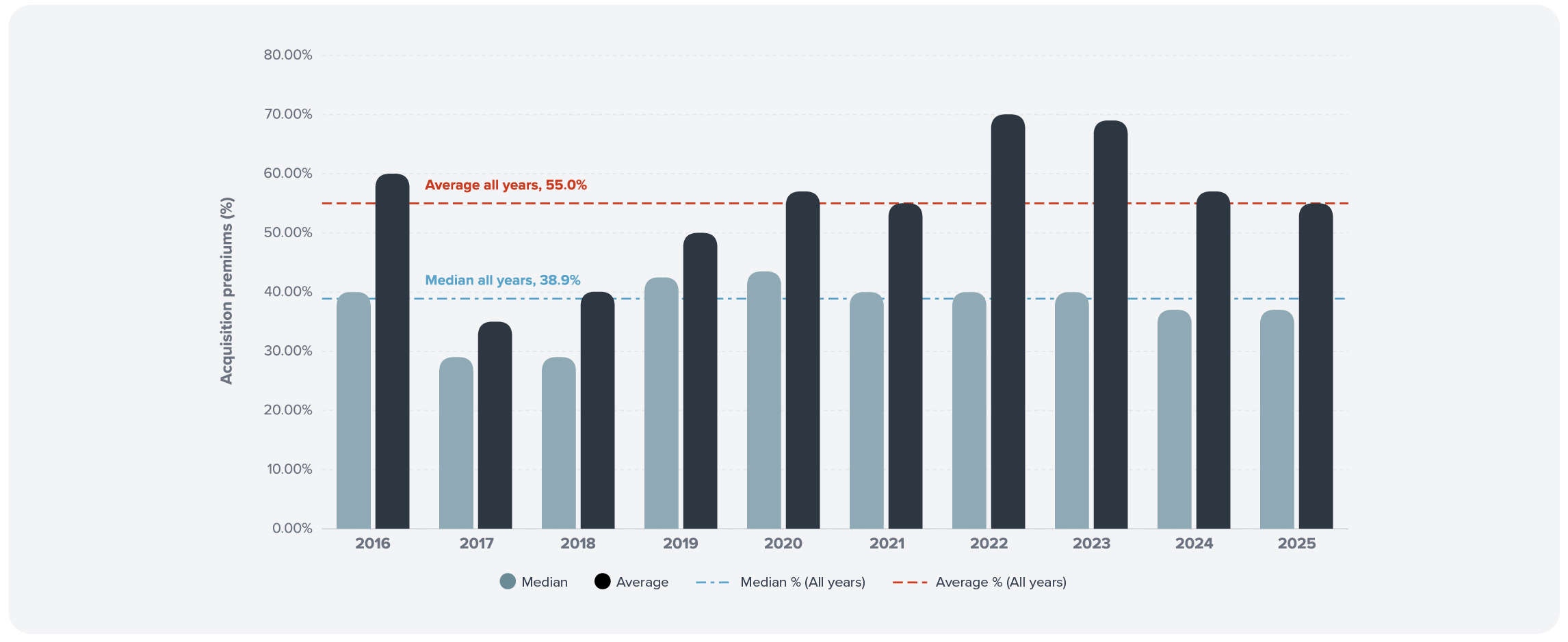
The lowest median acquisition premiums were observed during 2017 (28.7%), impacted by low premiums observed for transactions in the materials, real estate and services (other) sectors. The highest average acquisition premium was observed in 2022 (70.3%), among which ~61% comprises materials, energy or information technology sector transactions.
Consideration type: Cash versus equity
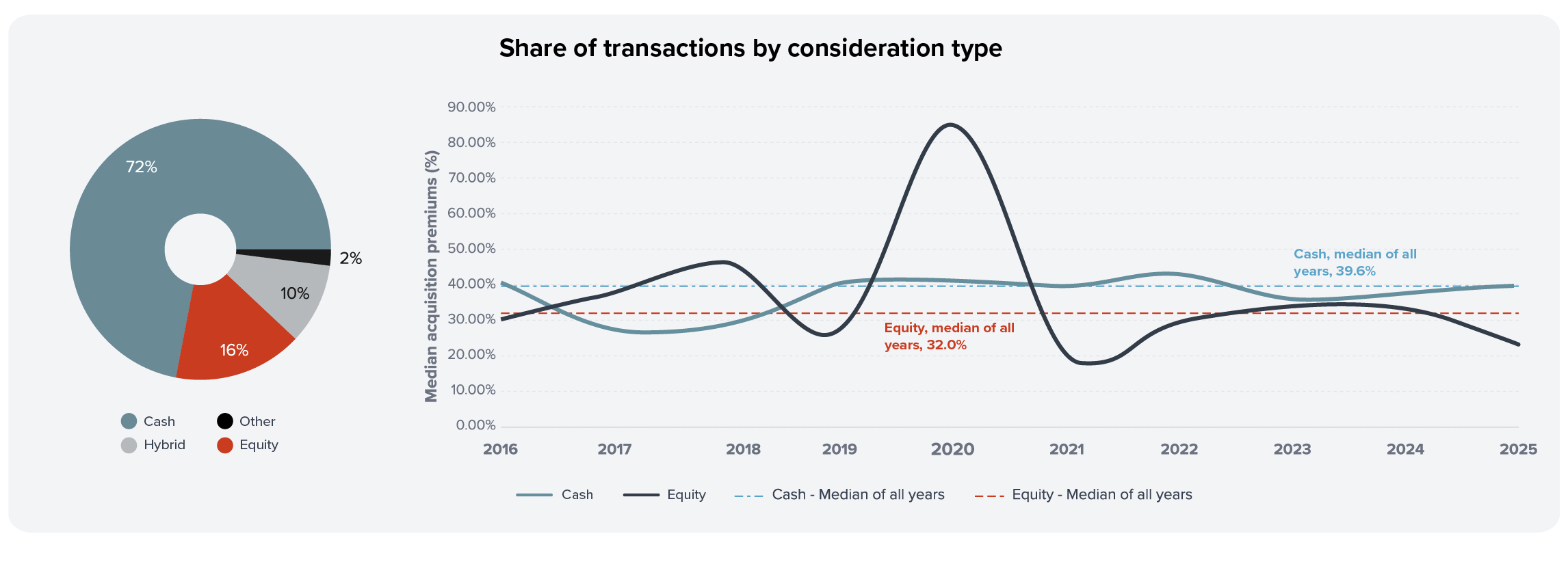
Cash remained the preferred consideration type followed by equity. During the majority of the 10 years analysed, median acquisition premiums for transactions with cash as the consideration type were higher, as compared with transactions where equity/scrip was the adopted consideration type.
Share of transactions by consideration type
Transaction size and acquisition premiums
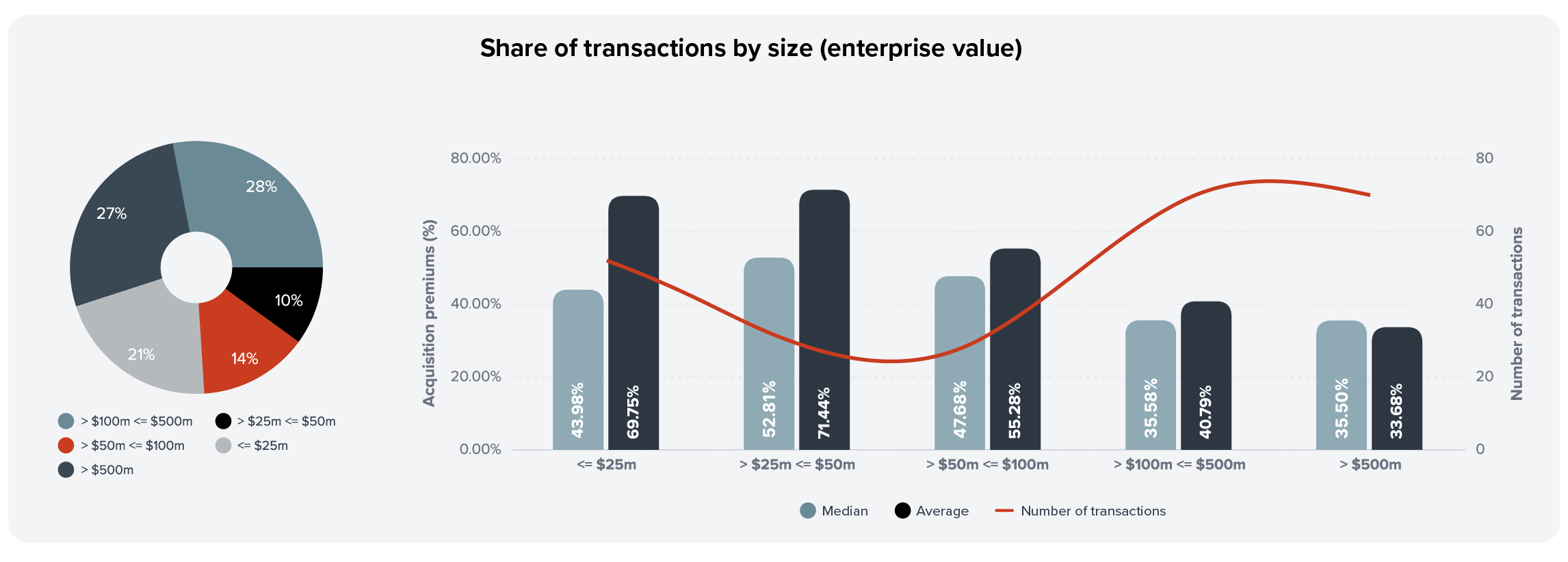
We note that generally lower acquisition premiums were observed for larger transactions (measured by the implied enterprise value). This may suggest that prices of larger firms are relatively more efficient. Furthermore, there exists a possibility that acquirers perceive that relatively less opportunities exist for merger and acquisition synergies due to larger firms being more mature. Integration challenges are also more possible to exist for acquisitions of larger companies which can impact prices paid.
Share of transactions by size (enterprise value)
Findex Valuation Services
We have deep expertise in assessing the true potential of a transaction or liquidity event.
Whether you’re planning an acquisition, divestment, restructure, option plan, refinance or developing a new business strategy, Findex can help ensure your valuation is prepared on a fundamentally sound basis.
Using relevant research, analysis and professional care, our Valuations team take a tailored approach to provide you with independent valuation considerations and the information required to assess an independent, robust and supportable market value of a transaction (or liquidity event) and instil confidence in your decision making.
Our team offers:
Business and equity valuations (for a range of purposes including tax, accounting, transactions, etc).
Pre and post deal Purchase Price Allocations.
Intangible asset valuations.
Pre-lend valuation advice.
Statutory reporting requirements.
Executive options and employee share plans.
Independent Expert Reports.
Impairment assistance.
Financial modelling.
Assessment of value of different equity classes
Assessment of economic loss and cost/benefit analysis.
Other valuation related advice, including discount rate assessment, benchmarking, research and critique engagements.
The views and opinions expressed in this article are those of the author and do not necessarily reflect the thought or position of Findex (Aust) Pty Ltd ABN 84 006 466 351 (Findex).
Nicole has over 20 years of experience as a valuation specialist providing solutions for commercial transactions and key events. She specialises in advice that focuses on valuations, discount rate assessments, impairment reviews, modelling and commercial impact evaluation.
After 18 years in roles with Deloitte and PwC, Nicole has developed deep expertise in financial accounting, business modelling and business valuation. This enables her to deliver high quality solutions that assist SMEs, private companies, partnerships, trusts and listed corporations across a range of industries and sectors.
Along with providing valuation advice to clients, Nicole also prepares independent expert reports for entities involved in merger and acquisition activity (under the requirements of the Corporations Law).
Qualifications and Professional Memberships:
• Masters in Applied Finance and Investment
• Bachelor of Business and Bachelor of Arts
• Chartered Accountants Australia and New Zealand (CAANZ)
• Fellow – Financial Services Institute of Australasia
• Accredited valuation specialist – Valuer – General Victoria
• Accredited valuation specialist – Australian Tax Office